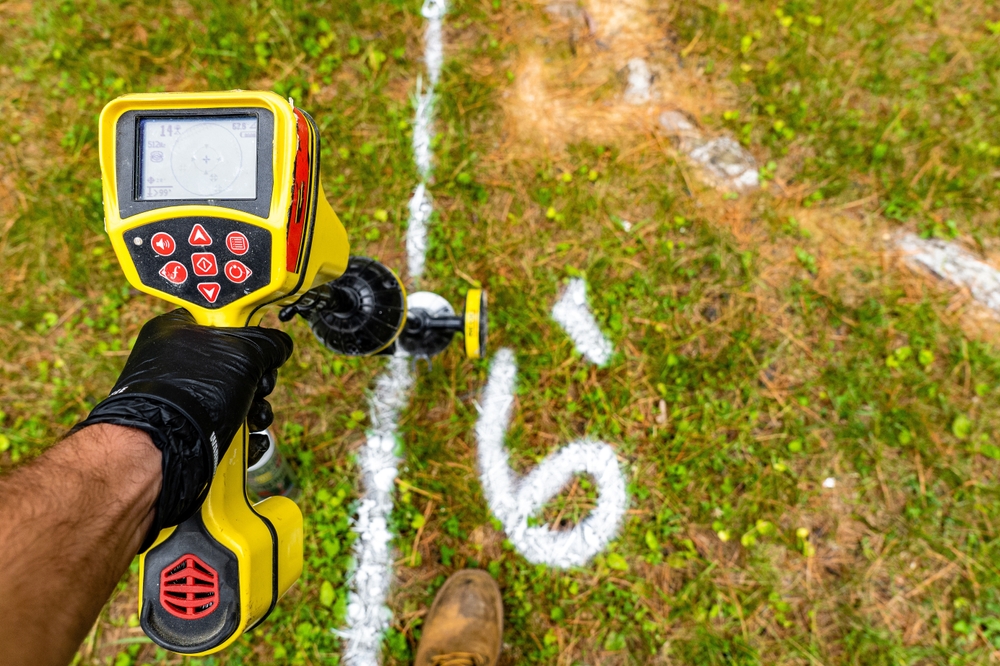
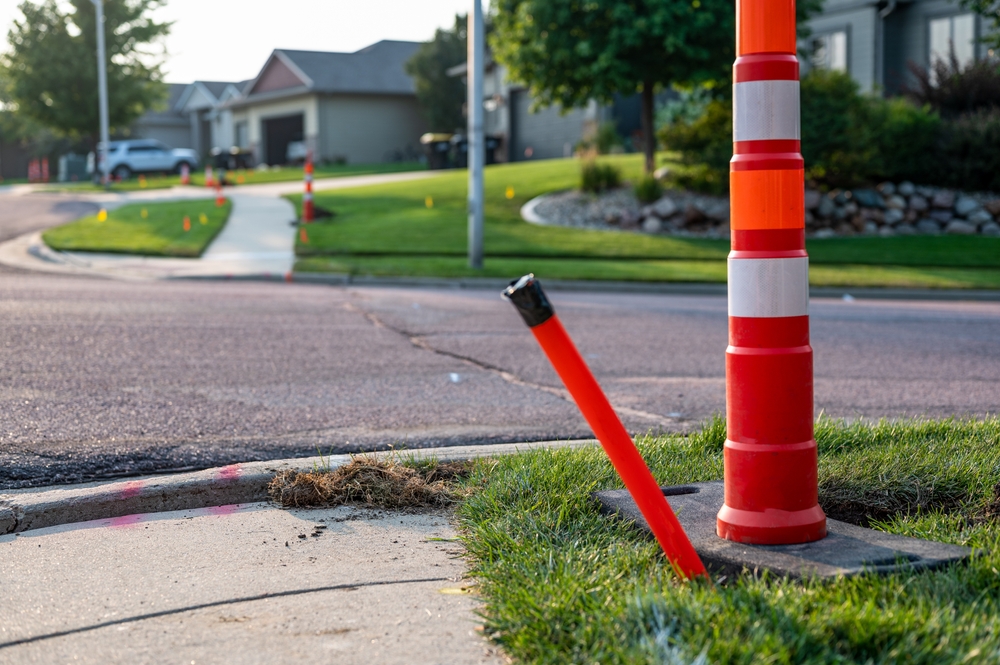
Before any excavation, utility locators mark two categories of lines: public utility lines (gas, electric, water, and telecom owned by utility companies) and private utility lines (laterals, irrigation, and site-specific lines owned by the property owner). Public utilities are marked through state 811 call centers at no cost, while private lines typically require a separate private locate service. Unlimited Underground coordinates both to keep excavation projects safe and on schedule.
Every excavation project, whether it’s a residential trench for a new water line or a commercial directional bore beneath a parking lot, starts underground before it starts in the ground. Long before a single bucket of soil is moved, a network of buried infrastructure has to be identified, marked, and respected. Get this step wrong, and the consequences range from costly service outages to serious safety hazards.
For contractors, property owners, and project managers across Maryland, Delaware, Pennsylvania, and Virginia, understanding the difference between public utility lines and private utility lines isn’t just a technical detail. It’s the foundation of a compliant, safe, and efficient project. Unlimited Underground, the Mid-Atlantic’s leading boring contractor, has spent more than 20 years navigating this exact distinction on job sites throughout the Delmarva and Pennsylvania regions. Here’s what every excavation plan needs to account for.
What counts as a public utility line?
Public utility lines are the infrastructure owned and maintained by utility companies or municipalities. These typically include:
- Natural gas mains
- Electric transmission and distribution lines
- Public water mains
- Sanitary and storm sewer mains
- Telecommunications and fiber optic cables owned by service providers
Because these lines serve entire neighborhoods, business districts, or municipalities, damaging one doesn’t just affect a single property. A single nicked gas line or severed fiber cable can disrupt service for hundreds of customers, trigger emergency response, and result in significant regulatory penalties for the excavating party.
This is why public utility lines fall under a standardized, state-mandated marking process. In every Mid-Atlantic state Unlimited Underground serves, contractors and property owners are required to contact 811 (Miss Utility in Maryland and Virginia, Miss Utility of Delmarva in Delaware, or PA One Call in Pennsylvania) before digging. These centers notify the relevant utility companies, who then send locators to mark their lines using industry-standard color codes: red for electric, yellow for gas, blue for water, orange for communications, and green for sewer lines.
Public utility locates are free, but they do require advance notice. Most states mandate a minimum of two to three business days between the 811 request and the start of excavation, which is a scheduling detail that experienced boring contractors build into every project timeline from the outset.
What counts as a private (public utility) line, and why does the distinction matter?
Private utility lines, sometimes called “private” or “non-public” lines, are infrastructure that serves an individual property but isn’t owned by a public utility company. These lines are the property owner’s responsibility, not the utility company’s, and they’re often the piece excavators overlook. Common examples include:
- Water or sewer laterals running from the main to a building
- Private electrical lines connecting a house to a detached garage or outbuilding
- Irrigation systems
- Propane lines from a tank to a residence
- Invisible dog fences or low-voltage landscape lighting
- Data or security cabling installed by a private contractor
Here’s the critical gap: 811 call centers only notify utility companies of public lines. They do not dispatch anyone to mark private infrastructure. If a property has a private water lateral running from the street to the house, that line will not show up on a standard 811 locate request unless a private utility locate is separately requested and performed.
This is one of the most common and costly misunderstandings in excavation planning. A property owner or general contractor may assume that calling 811 covers everything underground on a given site. In reality, it only covers the utility company-owned infrastructure up to the property line or meter. Everything beyond that point, including interior site lines, often requires a private locate performed by a qualified utility locating service.
Choose a private locate service if your project involves excavation anywhere beyond the utility meter or point of service, including backyards, driveways, parking lots, or any area with known or suspected irrigation, drainage, or electrical infrastructure installed by a previous owner or contractor. Rely on the standard 811 process alone if your work is limited strictly to areas where only utility company-owned lines are present and no private lines have ever been installed on the property, though this is rare on developed sites.
Why this distinction matters for directional boring and trenching projects
Unlimited Underground’s core services, including directional boring, standard trenching, missile boring, and broader utility construction work, routinely involve crossing both public and private lines, sometimes within the same job site. A directional bore beneath a road or parking lot, for example, may need to clear both a municipal water main and a private irrigation system feeding the adjacent landscaping.
This dual complexity is exactly why experienced crews matter. A contractor who only checks for public utility markings before boring is working with an incomplete picture of what’s underground. Unlimited Underground’s ten three-man crews are trained to account for both categories on every project, coordinating 811 requests alongside private locate services when the scope of work calls for it. This approach reduces the risk of utility strikes, service interruptions, and the project delays that come with them.
For municipalities, property managers, and commercial developers, this coordination becomes even more important on larger or multi-phase projects. A missed private line on a commercial property can shut down operations for a business, while damage to a public line can trigger liability claims that extend well beyond the excavation contract itself.
Planning your next excavation project
The line between public and private utilities isn’t always visible on the surface, but it has a direct impact on how a project is planned, permitted, and executed. Before any excavation begins, contractors and property owners alike should confirm two things: that an 811 request has been submitted with adequate lead time, and that a private locate has been considered for any area beyond the utility meter.
Getting this right protects the people doing the digging, the surrounding infrastructure, and the project timeline. It’s also one of the reasons experienced boring contractors are worth bringing in early, before the first shovel hits the ground.
If you’re planning a trenching, boring, or utility construction project anywhere in Maryland, Delaware, Pennsylvania, or Virginia, reach out to Unlimited Underground to discuss your site’s specific utility considerations before you break ground.